18 Easy Macrame Christmas Decorations for Beginners
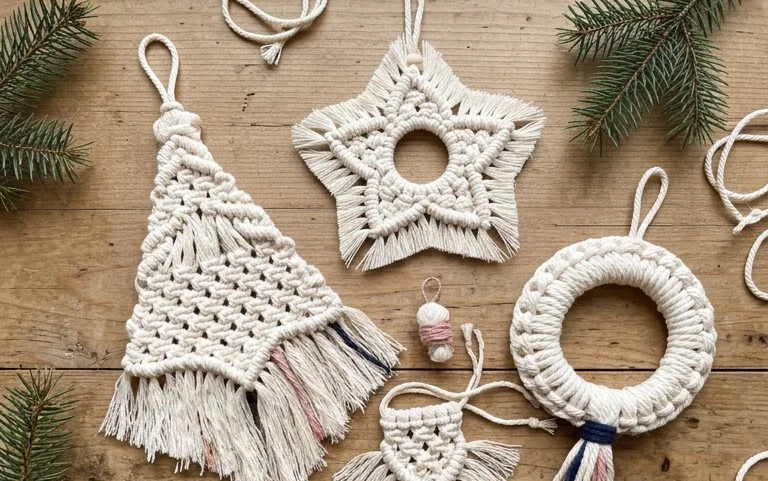
Cotton cord, a few simple knots, and a little fringe can turn into a tree full of handmade Christmas charm. These 18 macrame decoration ideas range from small ornaments to pieces that dress up a mantel or gift wrapping, with soft textures that look lovely in natural cream or festive colors. They suit beginners who want to practice at an unhurried pace, as well as gift makers and home decor fans who enjoy adding personal touches to the season. You will get a feel for basic macrame techniques such as lark’s head knots, square knots, and neat fringe, and see how changing cord color or length alters the finished look. Each small project gives you a satisfying result you can hang, share, or tuck into a gift, often using only a short length of cord and a simple support such as a wooden ring or dowel.
Why You’ll Love This Pattern
This cotton dishcloth is a flat, square project made with simple single crochet rows. Its dense fabric gives you a sturdy cloth for everyday kitchen use, and the basic stitch makes it a comfortable choice for a first finished project.
The pattern uses about 80 yards of worsted-weight cotton, so a partial skein may be enough. At roughly two to three hours of crocheting, it is also manageable to finish in a sitting or two. The finished cloth measures about 8 inches square, a useful size for washing dishes or wiping counters.
The rows were easy to keep track of, and the finished cloth feels firm without being stiff. I made mine during a couple of quiet evenings.
— Mara, home crocheter
Pattern Overview & Skill Level
- Skill Level: Beginner. You need to know how to chain and single crochet.
- Approximate Time: Two to three hours, depending on your pace and tension.
- Construction: A single flat square worked in rows from the bottom edge upward. There is no joining or separate border.
- Finished Dimensions & Sizing: About 8 × 8 inches (20 × 20 cm) after washing and drying flat, using the gauge below.
Gauge matters less for a dishcloth than for a fitted garment, but it affects the finished size and how much cotton you use. Make a small swatch if you want to check that your fabric feels absorbent and flexible rather than loose or board-like.
Materials & Supplies Needed
- Yarn: About 80 yards (73 m) of worsted-weight cotton yarn, weight #4. Choose one color or use cotton scraps that total the required yardage. Avoid novelty yarns, which can make the cloth harder to scrub with and wash.
- Hook Size: 5.0 mm / H-8 crochet hook. If your stitches are very tight, try 5.5 mm / I-9; a larger hook will make a looser, slightly larger cloth.
- Notions: Tapestry needle for weaving in the starting and ending tails, scissors, and a ruler or tape measure. A stitch marker is optional for marking the first row.
- Gauge: 16 single crochet stitches and 18 rows measure about 4 inches (10 cm) square after washing and drying flat. Use the same cotton yarn and hook for your swatch.
- Safe substitutions: A different worsted cotton is the closest match. Cotton blends can work, but check the care label and expect a change in softness or absorbency. Acrylic is less absorbent and may not suit a cloth used for dishes. Changing yarn weight also changes the size and yardage needed.
Stitch Guide & Abbreviations (US Terms)
- ch: Chain.
- sc: Single crochet. Insert the hook into the stitch, yarn over and pull up a loop, yarn over again, then pull through both loops.
- st: Stitch.
- sts: Stitches.
- rep: Repeat.
The turning chain does not count as a stitch in this pattern. Work the first single crochet into the first stitch of each row, not into the turning chain.
Step-by-Step Pattern Instructions
Dishcloth
Foundation: Ch 33. Keep the chain relaxed so the starting edge does not pull in. If your chain is much tighter than your single crochet rows, use a hook one size larger just for the chain.
Row 1: Sc in the second ch from the hook and in each ch across. Turn. (32 sts)
Row 2: Ch 1, sc in each st across. Turn. (32 sts)
Rows 3–36: Rep Row 2. Each row has 32 sc. At the end of Row 36, fasten off, leaving a tail long enough to weave in. (32 sts in each row)
Count the stitches now and then as you work. The cloth should have 36 rows total, with 32 single crochets in every row. If an edge starts to narrow, check that you have worked into the first and last stitches rather than skipping them.
Finishing
Thread the tail onto a tapestry needle. Weave it through several stitches on the wrong side, change direction, and pass through a few more stitches before trimming it close. Repeat with the starting tail. Wash the cloth according to the yarn label, then lay it flat and ease the corners into a square shape as it dries.
Care & Washing Instructions
- For cotton yarn, machine-wash with similar colors in warm water, up to 40°C (104°F), unless the yarn label gives different instructions.
- Dry flat for the neatest square shape, or tumble-dry on low only if the yarn label permits it.
- While damp, reshape the corners and sides by hand; light blocking is usually enough for this simple cotton fabric.
Pro Tips & Common Mistakes to Avoid
- Keep your tension even, especially along the foundation chain. A tight starting chain can make the bottom edge shorter than the rest of the cloth.
- Count 32 stitches at the end of a row every few rows. If you tend to lose the first or last stitch, place a marker in each edge stitch and move the markers up as you work.
- Weave in yarn tails on the wrong side, threading through the backs of several stitches and changing direction once. Avoid leaving a short tail that could work loose during washing.
- To adjust the size, add or remove chains in multiples of one stitch and work more or fewer rows. A wider or taller cloth uses more yarn; check the dimensions as you go because changing the hook also changes the fabric density.
Frequently Asked Questions
Can I make this dishcloth with a different yarn?
Yes. Worsted-weight cotton is the recommended choice because it is absorbent and holds up to regular washing. A cotton blend may feel softer or drape more, while acrylic is less absorbent. Follow the substitute yarn’s care label and expect the finished size to vary.
How can I make the dishcloth larger or smaller?
Change the foundation chain to set the width, then crochet more or fewer rows to set the height. Each extra chain adds one stitch to the row because the first chain is skipped. A larger cloth takes more yarn, so keep an eye on your remaining yardage.
Is this pattern suitable for a beginner?
Yes. It uses only chains and single crochet, worked back and forth in rows. The main thing to watch is the stitch count: each row should contain 32 stitches, with no stitch worked into the turning chain.
Can I sell dishcloths made from this pattern?
Check the designer’s terms before selling finished items, and follow any credit or small-business requirements they set. If you sell the cloth, describe the yarn accurately and include its care instructions.
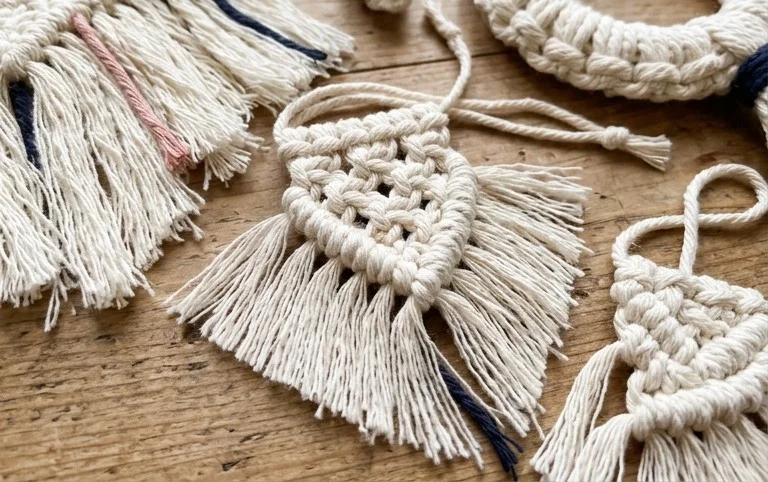
A row of handmade macrame ornaments brings a warm, tactile touch to a Christmas tree, mantel, or wrapped present, and each finished knot carries the pleasure of making it yourself. For a simple variation, swap natural cotton cord for deep red or forest green to suit your holiday colors, or trim the fringe shorter for a cleaner shape. Take a photo of your favorite decoration in its spot at home and share it on Pinterest or social media so other makers can see how yours turned out. If you enjoyed working with cord and knots, explore more free patterns on the blog for your next small handmade project. Keep a few extra lengths of cord nearby, since even a tiny change in color or finish can make another version feel personal.