Beginner Granny Square Christmas Stocking Free Pattern
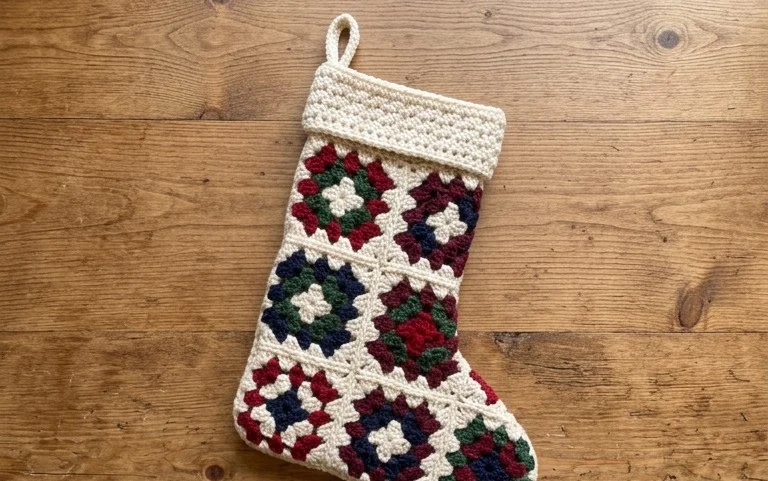
Soft yarn squares in cheerful Christmas colors come together to make a stocking with a patchwork look and a cozy, handmade feel. This Granny Square Christmas Stocking Crochet Pattern suits newer crocheters who are ready to practice joining motifs, as well as gift makers and anyone who likes adding handmade touches to holiday decor. Each square is satisfying to finish on its own, and seeing the pieces take shape as a stocking makes the project feel rewarding without requiring a complicated stitch pattern. You’ll learn how granny square motifs fit together to form the stocking, along with the finishing details that give it a neat shape. Choose classic red and green, or use colors that match your tree and mantel.
Why You’ll Love This Pattern
A firm cotton dishcloth is useful at the sink, and its simple rows make a good first project for practicing even single crochet stitches. This beginner pattern uses one stitch throughout, so you can focus on keeping the edges straight rather than tracking a complicated repeat. The finished cloth measures about 7.5 by 7.3 inches, a handy size for everyday washing and wiping. One skein usually provides enough yarn for the cloth, with a little left over for another small cotton project.
The dense fabric holds up well to regular use, and the flat shape is easy to wash and store. Use a stitch marker to keep track of row starts, especially if you tend to miss the last stitch at the edge.
The rows were easy to follow, and the cotton cloth came out sturdy without feeling stiff. I used it at the sink the same afternoon.
— Jo, sample crocheter
Pattern Overview & Skill Level
- Skill Level: Beginner. You need to make chains and single crochet stitches.
- Approximate Time: About 2–3 hours, depending on your pace and how often you stop to check your stitch count.
- Construction: Worked flat in rows from a foundation chain. The cloth has no seams or separate pieces.
- Finished Dimensions & Sizing: About 7.5 inches wide by 7.3 inches tall after washing and drying flat. Dimensions assume the gauge below.
Gauge: 16 single crochet stitches and 18 rows measure 4 inches in a 4-inch square, worked with the recommended hook. Gauge can shift with cotton yarn, so check it before starting if you want to match the finished size closely.
Materials & Supplies Needed
- Yarn: About 110 yards of worsted-weight (#4) 100% cotton yarn. One solid color is enough; choose a smooth, tightly spun cotton that can handle frequent washing.
- Hook: 5.0 mm / H-8 crochet hook. If your fabric is very loose, try a 4.5 mm hook; if it feels stiff, try 5.5 mm and check the gauge again.
- Notions: Tapestry needle for weaving in the two yarn ends, scissors, and a ruler or tape measure. A stitch marker is useful for identifying the first stitch of each row.
- Substitutions: Cotton-linen yarn can work if its label recommends a similar hook size; it may feel a little firmer and can change the finished dimensions. Avoid acrylic for a dishcloth meant to absorb water, because it is less absorbent than cotton. Any change in yarn weight or fiber can alter the size, texture, and yardage needed.
Stitch Guide & Abbreviations (US Terms)
- ch: Chain. Yarn over and pull the yarn through the loop on your hook.
- sc: Single crochet. Insert the hook into the indicated stitch, yarn over and pull up a loop, then yarn over and pull through both loops on the hook.
- st / sts: Stitch / stitches.
Work each single crochet under both top loops of the stitch unless the instructions say otherwise. The turning chain does not count as a stitch. After turning, work the first single crochet into the first stitch of the previous row.
Step-by-Step Pattern Instructions
Dishcloth
Use the same yarn and hook throughout. Make the foundation chain loosely enough that the first row does not pull in at the bottom edge. Count the stitches after each row, including the last stitch at the far edge.
- Row 1: Ch 32. Sc in the second ch from the hook and in each ch across. You will have 31 single crochet stitches. (31 sts)
- Rows 2–33: Ch 1 and turn. Sc in each stitch across, working the last sc into the final stitch at the row edge. The turning chain does not count as a stitch. Repeat this row for all 32 rows. (31 sts each row)
Finishing
After Row 33, cut the yarn, leaving a tail of about 6 inches. Pull the tail through the final loop to secure it. Thread the tail onto a tapestry needle and weave it back and forth through several stitches on the wrong side; change direction once so the end is less likely to work loose. Weave in the foundation tail the same way. Avoid pulling the tails so tightly that the edge puckers.
Measure the cloth before washing. If it is close to 7.5 by 7.3 inches and the stitches lie flat, the gauge is on target. A cotton dishcloth can soften after its first wash, so let it dry completely before using it.
Care & Washing Instructions
- Wash cotton in cool or warm water, up to 30°C (86°F), with similar colors.
- Dry flat or tumble-dry on low if the yarn label allows it; reshape the edges while damp.
- Pin or smooth the cloth to its intended dimensions for gentle blocking, then let it dry fully.
Pro Tips & Common Mistakes to Avoid
- Keep the tension steady: Cotton has less stretch than many acrylic yarns. Let the yarn move freely over your fingers and avoid tightening each stitch hard against the hook.
- Count the edge stitches: Place a stitch marker in the first stitch of each row if you have trouble spotting it. Count 31 stitches before turning; skipped edge stitches make the cloth narrower over time.
- Hide the tails securely: Weave each end through several stitches on the wrong side, then change direction. Do not knot the ends, since knots can make a hard bump in the fabric.
- Adjust size with a plan: For a wider cloth, add chains to the foundation, then work one fewer single crochet than the number of chains. Add or remove rows for height. A larger cloth takes more yarn, and a denser gauge also uses more yarn.
Frequently Asked Questions
Can I use a different yarn for this dishcloth?
Yes. A similar-weight cotton yarn is the closest substitute. Cotton-linen blends may feel firmer, while a different yarn weight can change both the texture and finished dimensions. Check the yarn label and make a small gauge sample if size matters.
How can I make the cloth larger or smaller?
Change the foundation chain to adjust the width, remembering that the finished row has one fewer stitch than the chain count. Work more or fewer rows to change the height. The finished measurements will also depend on your personal gauge, and a larger cloth requires more yarn.
Is this pattern suitable for a first crochet project?
Yes. It uses only chains and single crochet stitches, and the row count stays the same throughout. Practice identifying the first and last stitches of a row; those are the spots where beginners most often add or lose a stitch.
May I sell dishcloths made from this pattern?
Check the pattern designer’s terms before selling finished items, and follow any conditions they set. If you share the pattern or post your work online, credit the designer when required. Use your own photos for listings.
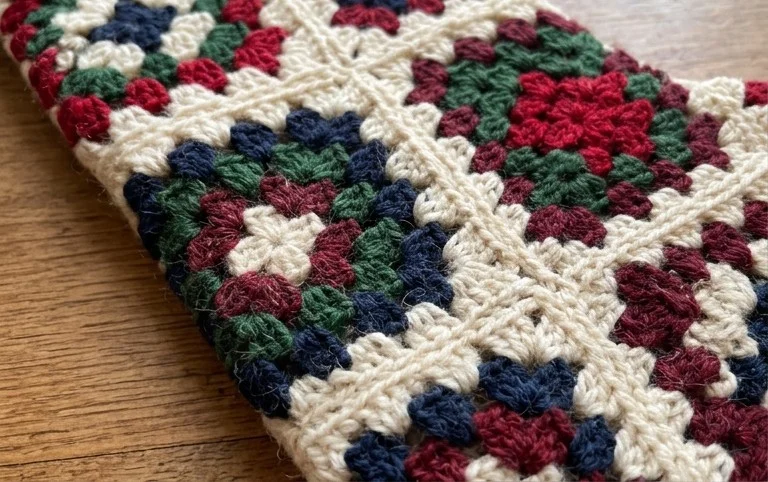
Your finished stocking brings a bit of handmade patchwork charm to a mantel, banister, or holiday gift display, and every square gives it a personal touch. For a simple variation, use a soft neutral palette with one bright accent color to make the motif pattern stand out. You can also keep the same colors and change their placement for a different look without altering the basic design. If you make one, share a photo on Pinterest or your favorite social media platform so other crocheters can see your color choices. Then browse the blog for more free crochet patterns to make for the season and beyond.