Easy Christmas Tree Crochet Stocking Free Pattern
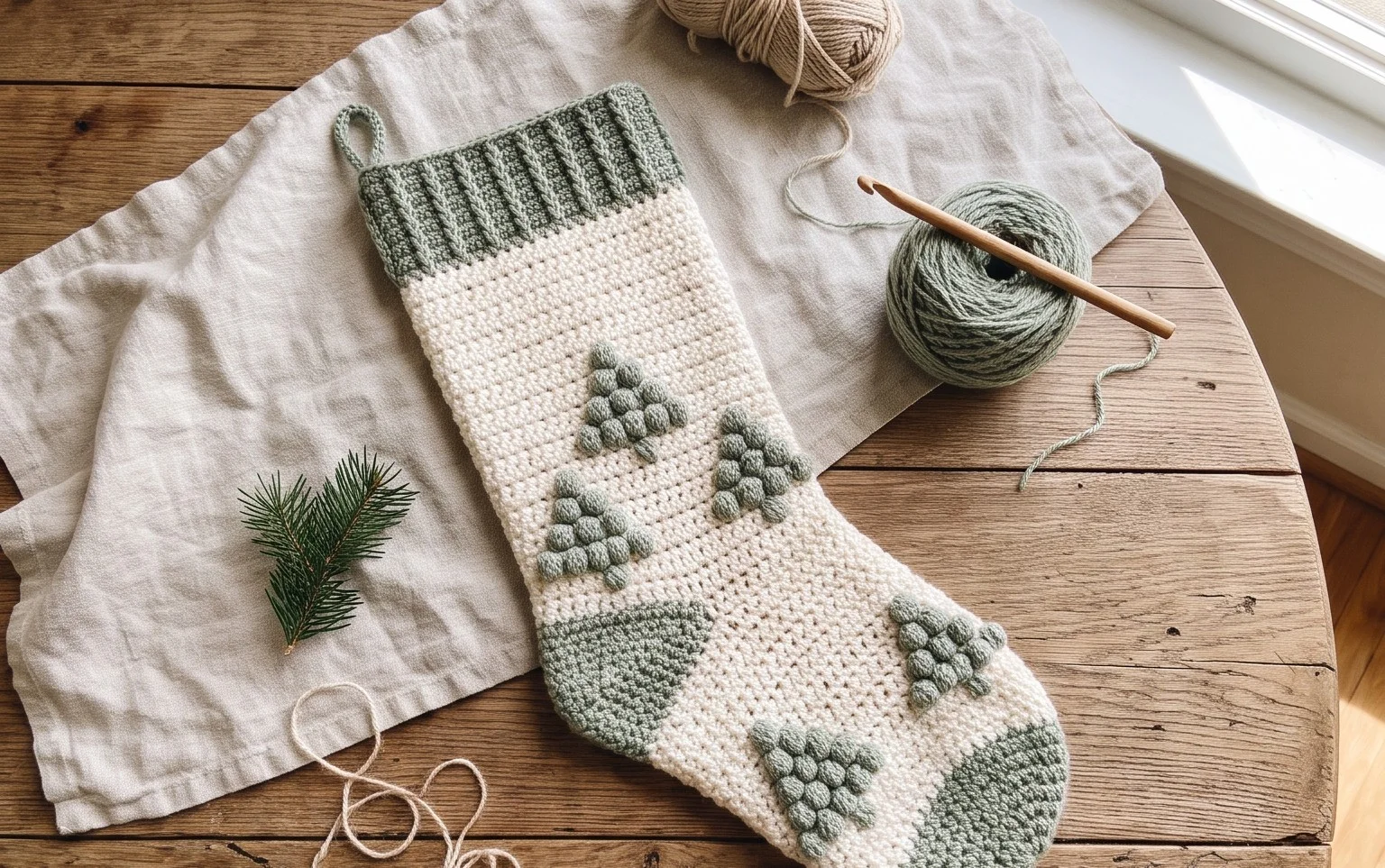
A crochet stocking with a little Christmas tree motif brings handmade texture to a mantel, stair rail, or gift pile. The finished piece has the familiar stocking shape and a festive detail that feels right at home among lights and greenery. It suits newer crocheters who want to practice shaping, as well as experienced makers putting together thoughtful gifts or adding a personal touch to holiday decor. Working through the pattern gives you a chance to focus on steady stitches and the changes that form the stocking, without needing a complicated colorwork chart. You’ll find the materials, pattern guidance, and helpful tips for keeping your edges neat and your finished piece ready to hang. Pick your favorite seasonal yarn, settle in with a hook, and enjoy watching the shape take form row by row.
Why You’ll Love This Pattern
A cotton dishcloth with a firm single-crochet fabric is useful at the sink and simple to keep clean. This beginner pattern uses one stitch throughout, so you can focus on keeping the edges straight rather than learning a complicated repeat. The finished cloth measures about 7.5 inches square, a handy size for everyday washing.
One skein can make several cloths, depending on its yardage, and the plain texture works well with leftover worsted cotton. Each row is short, so the project is easy to pick up between other tasks. A finished cloth also makes a practical handmade gift when paired with a bar of soap or kitchen towel.
The rows were easy to keep track of, and the cotton made a cloth that feels sturdy without being stiff. I finished mine over a couple of evenings.
— Mara, illustrative sample maker
Pattern Overview & Skill Level
- Skill Level: Beginner. You need to chain, single crochet, and turn your work.
- Approximate Time: About 2–3 hours, depending on your pace and how often you stop to check your stitches.
- Construction: Worked flat in rows from the bottom edge upward, then fastened off and woven in.
- Finished Dimensions & Sizing: Approximately 7.5 × 7.5 inches (19 × 19 cm) at the gauge given below. Cotton and individual tension can change the final size.
- Gauge: 4 single crochet stitches and 4 rows measure 1 inch (2.5 cm) in the main fabric. Gauge is useful for estimating the finished size; a small difference is fine for a dishcloth.
Materials & Supplies Needed
- Yarn: About 85–100 yards (78–91 m) of worsted-weight (#4) 100% cotton yarn. Use one color, or change colors between rows if you want to use scraps. Cotton is absorbent and tolerates regular washing.
- Hook Size: 5.0 mm / H-8 crochet hook. If your fabric is loose and gappy, try a 4.5 mm / 7 hook; if it feels too stiff, try a 5.5 mm / I-9 hook. Either change may alter the finished dimensions.
- Notions: Tapestry needle for sewing in yarn ends, scissors, and a ruler or tape measure. A stitch marker is optional but useful for marking the first stitch of a row.
- Substitution: Another worsted cotton yarn is the closest substitute. Cotton blends may feel softer or dry differently. Avoid acrylic for a cloth intended for hot cookware, and check the yarn label for washing guidance. A different yarn weight will change the cloth’s size and may require a different hook.
Stitch Guide & Abbreviations (US Terms)
- ch: Chain stitch. Yarn over and pull through the loop on the hook.
- sc: Single crochet. Insert the hook into the stitch, yarn over and pull up a loop, yarn over again and pull through both loops.
- st / sts: Stitch / stitches.
- rep: Repeat.
The turning chain at the start of each row does not count as a stitch. Work the first single crochet into the first stitch of the previous row, directly below the turning chain.
Step-by-Step Pattern Instructions
Dishcloth
- Foundation: Ch 31. Keep the chain relaxed so the lower edge does not pull in.
- Row 1: Sc in the second ch from the hook and in each ch across. Turn. (30 sts)
- Row 2: Ch 1, sc in each st across. Turn. (30 sts)
- Rows 3–10: Rep Row 2. Turn at the end of each row. (30 sts per row)
- Rows 11–20: Rep Row 2. Turn at the end of each row. (30 sts per row)
- Rows 21–30: Rep Row 2. Do not turn after Row 30. (30 sts per row)
Lay the piece flat and check that it is close to 7.5 inches tall. Small differences are normal, but a much taller or shorter piece may mean your row gauge differs from the stated 4 rows per inch.
Finishing
Cut the yarn, leaving a tail about 6 inches (15 cm) long. Pull the tail through the final loop to fasten off. Thread it onto a tapestry needle and weave it through the backs of several stitches, changing direction once to help secure it. Weave in the foundation tail the same way, then trim the remaining yarn close to the fabric without cutting any stitches. If needed, dampen the cloth and smooth it to a square shape before leaving it to dry.
Care & Washing Instructions
- For cotton yarn, machine wash on a gentle or regular cycle in cool to warm water, about 30–40°C (86–104°F), unless the yarn label says otherwise.
- Dry flat or tumble dry on low if the yarn label allows it; reshape the edges while the cloth is damp.
- Block or smooth the cloth flat after washing if the corners curl, and follow the yarn label if you used a cotton blend or another fiber.
Pro Tips & Common Mistakes to Avoid
- Keep your tension even: Cotton has little stretch, so a tight foundation chain can make the lower edge narrower than the rest. If that edge pulls in, loosen the chain or use a hook half a size larger just for the foundation.
- Count each row: Check for 30 stitches before turning. Place a marker in the first stitch of a row if you tend to skip it; placing one in the last stitch can also help prevent the edge from shrinking.
- Hide ends securely: Weave each tail through the backs of several stitches, then change direction before trimming. A short tail worked through only one row can loosen with repeated washing.
- Adjust size with care: Add or remove foundation chains to change the width, then work more or fewer rows to change the height. At the same gauge, each extra stitch or row adds about ¼ inch; a larger cloth uses more yarn in roughly the same proportion as its added area.
Frequently Asked Questions
Can I use a different yarn instead of worsted cotton?
Yes. Another worsted cotton is the most predictable choice for absorbency and washing. A cotton blend can work, but check its care label. Different weights change the finished size, stitch definition, and amount of yarn needed.
How can I make the dishcloth wider or narrower?
Change the foundation chain, keeping an odd number so the first single crochet still goes into the second chain from the hook and leaves the intended stitch count. Add or remove rows for the height. Measure as you go because gauge affects the dimensions.
Is this pattern suitable for a first crochet project?
Yes, if you are comfortable making a chain and single crochet. The main challenge is keeping 30 stitches in every row. Count before turning, especially during the first few rows, and use a marker at the row edge if helpful.
May I sell dishcloths made from this pattern?
Check the pattern designer’s terms before selling finished items, and follow any credit or listing requirements. If you publish photos, describe the yarn and finished measurements accurately so buyers know what to expect.
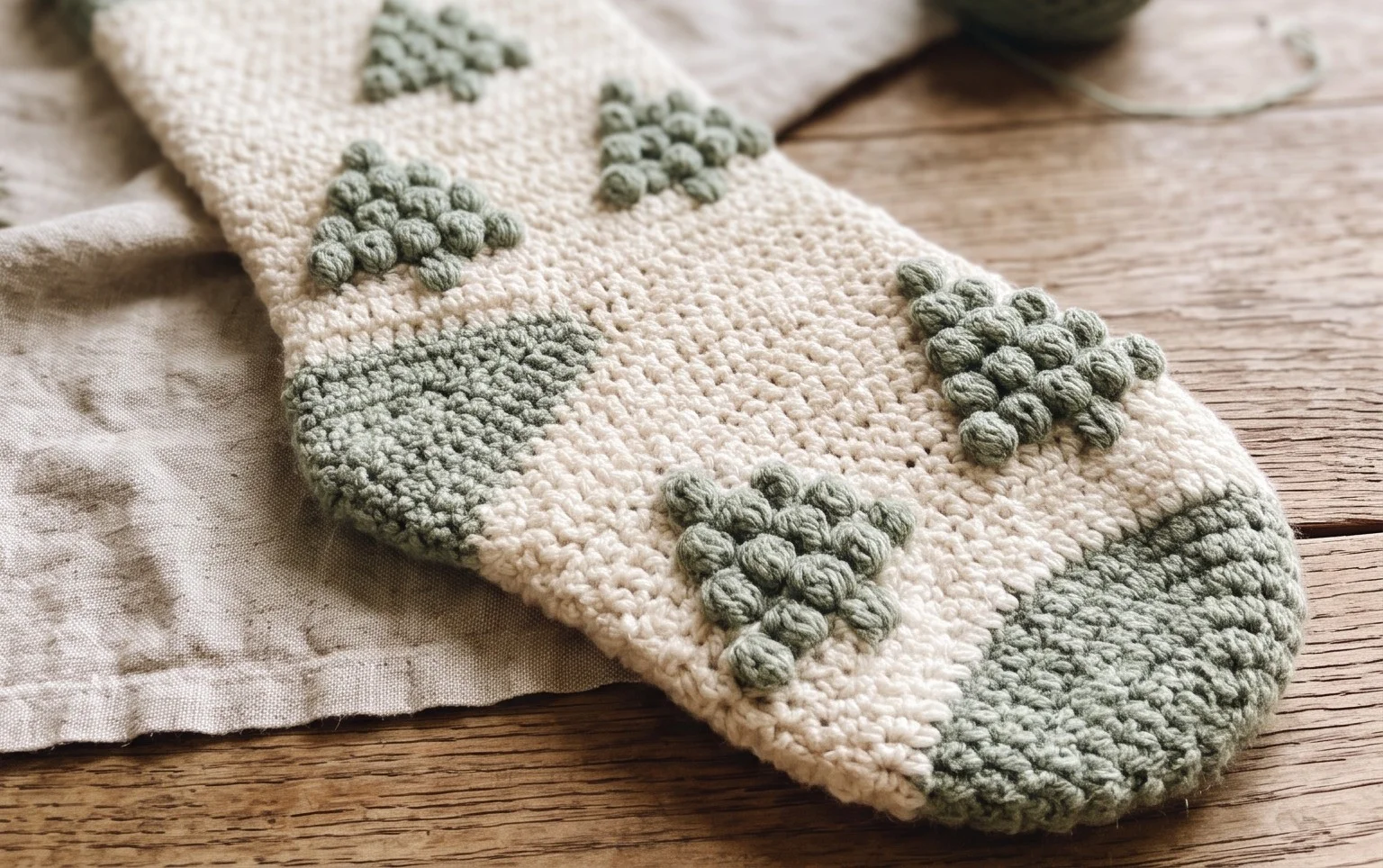
Once the final stitches are woven in, you’ll have a handmade stocking with a cheerful tree detail and a cozy place in your holiday decorating. Make a simple variation by choosing a different color for the tree or stocking to suit your home or the person receiving it. A small change in yarn shade can give the same pattern a quieter, classic look or a brighter, playful feel. If you make one, share a photo on Pinterest or your favorite social media account so other crocheters can see your version. Then browse more free patterns on the blog for another relaxing project to keep your hook busy through the season.