Easy Crochet Christmas Slippers for Adults: Free Patterns
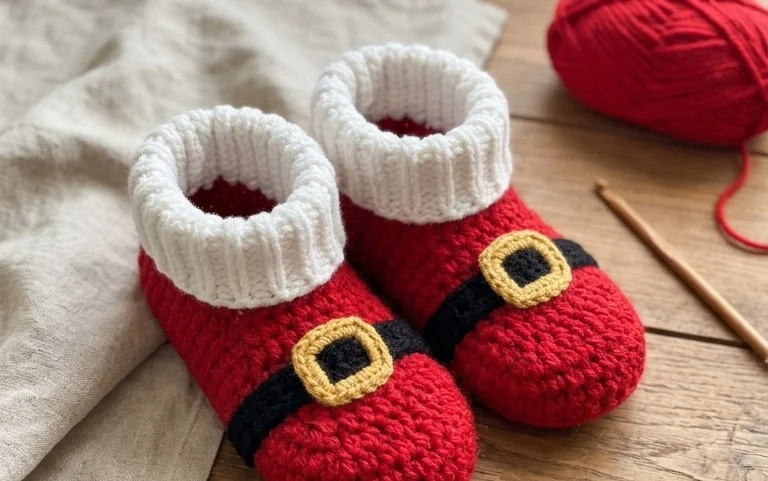
A pair of crochet Christmas slippers can bring a little extra warmth to cold mornings, with soft yarn underfoot and festive colors at the toes or cuffs. These adult designs suit beginners who want a wearable project, as well as experienced crocheters making handmade gifts for family and friends. The finished slippers feel cozy around the house and can be adjusted to suit different feet and favorite holiday colors. In these free patterns and tutorials, you’ll find guidance on choosing yarn, checking the fit, and working the stitches and shaping that turn a flat piece into a comfortable slipper. You’ll also pick up practical finishing tips, including how to secure yarn ends and help the soles feel steadier on smooth floors. Settle in with your hook and make a pair for the season.
Why You’ll Love This Pattern
This crochet dishcloth uses a simple half double crochet stitch and a rectangular shape, so you can focus on even edges instead of shaping. The cotton fabric is soft enough for everyday kitchen use and has a little texture for wiping counters and washing dishes.
One cloth takes about two to three hours, depending on your pace. The pattern is a useful way to practice consistent tension, and a single skein can often make more than one cloth. It also works well as a practical handmade gift when paired with a bar of soap or a kitchen towel.
The rows were easy to remember, and the cotton made a sturdy cloth that dried well between uses.
— Sample maker, beginner crocheter
Pattern Overview & Skill Level
- Skill Level: Beginner. You need to chain, make half double crochet stitches, and turn your work.
- Approximate Time: Two to three hours.
- Construction: A flat rectangle worked back and forth in rows, then finished with a woven-in yarn tail. There is no seam or separate border.
- Finished Dimensions & Sizing: About 8.5 × 10 inches (22 × 25.5 cm), using the gauge below. Small differences are normal with cotton yarn and hand tension.
Gauge is 14 half double crochet stitches and 10 rows to 4 inches (10 cm), measured without stretching. Make a small swatch if you want to check your finished size; adjust your hook if your stitches are much tighter or looser.
Materials & Supplies Needed
- Yarn: About 80 yards (73 m) of worsted-weight cotton yarn, weight #4, in one color. Choose 100% cotton for absorbency and heat tolerance around warm dishwater.
- Hook Size: 5.0 mm / H-8. Use the hook that gives you the stated gauge; cotton can feel firm, so avoid pulling each stitch tight.
- Notions: Tapestry needle for weaving in ends, scissors, and a ruler or tape measure for checking gauge.
- Substitutions: A cotton-linen blend can make a slightly drapier cloth. Recycled cotton may feel firmer or vary in thickness. Avoid acrylic for a dishcloth used with hot cookware, and expect different yarn weights to change the dimensions and yardage.
Stitch Guide & Abbreviations (US Terms)
- ch = chain.
- hdc = half double crochet. Yarn over, insert the hook in the stitch, yarn over and pull up a loop, then yarn over and pull through all three loops.
- st(s) = stitch(es).
- yo = yarn over.
The turning chain does not count as a stitch. Work the first half double crochet of each row into the first stitch, directly below the turning chain, and place the final stitch in the last stitch of the previous row.
Step-by-Step Pattern Instructions
Dishcloth
- Row 1: Ch 32. Hdc in the third ch from the hook and in each remaining ch across. The skipped chains do not count as stitches. (30 sts)
- Row 2: Ch 2, turn. Hdc in each st across. (30 sts)
- Rows 3–25: Repeat Row 2 for each row, working 23 more rows in total. Keep the stitch count at 30 on every row. (30 sts each row)
Finishing
After Row 25, fasten off, leaving a tail about 6 inches (15 cm) long. Pull the tail through the final loop. Thread it onto a tapestry needle and weave it through several stitches on the wrong side, changing direction once so it is secure. Weave in the starting tail the same way, then trim the extra yarn. Lay the cloth flat and measure it; if it is noticeably shorter than 10 inches, you can add more rows before fastening off.
Care & Washing Instructions
- Machine wash cotton in warm water, up to 40°C (104°F), with similar colors; use a gentle cycle if the yarn label recommends one.
- Dry flat to help the cloth keep its rectangular shape, or tumble dry on low if the yarn label allows it.
- Reshape while damp and smooth the edges flat; cotton usually needs only light blocking rather than pins or steam.
Pro Tips & Common Mistakes to Avoid
- Keep your tension relaxed and consistent. If the first chain is much tighter than your rows, use a slightly larger hook just for the foundation chain.
- Count the stitches at the end of each row. A marker in the first or last stitch can make the turning edge easier to see and help prevent accidental increases or skipped stitches.
- Weave in each end on the wrong side, passing the needle through the backs of several stitches and changing direction. A short tail woven through only one row can work loose with repeated washing.
- To make the cloth wider, begin with more chains, adding one chain for each extra half double crochet stitch. Each added stitch increases the width by about 0.3 inches (0.7 cm) at the stated gauge and uses more yarn; extra rows increase the length.
Frequently Asked Questions
Can I use a different yarn fiber?
Yes, but cotton is the most practical choice for a dishcloth because it absorbs water and tolerates regular washing. A cotton-linen blend can feel softer and drape more. Check the yarn label before using a fiber that cannot be washed warm.
How can I make the dishcloth smaller or larger?
Change the foundation chain to adjust the width, keeping an even number of half double crochet stitches after Row 1. Work fewer or more rows to adjust the length. A larger cloth needs more yarn, and a different yarn weight can change both size and texture.
Is this pattern suitable for a first crochet project?
Yes. It uses one stitch throughout and has no shaping or sewing. The main challenge is keeping the edges straight, so count 30 stitches after every row and check that your first and last stitches are easy to identify.
Can I sell dishcloths made from this pattern?
Check the designer’s terms before selling finished items, and follow any requirements for pattern credit. If you sell the cloth, include accurate fiber and care information from the yarn label.
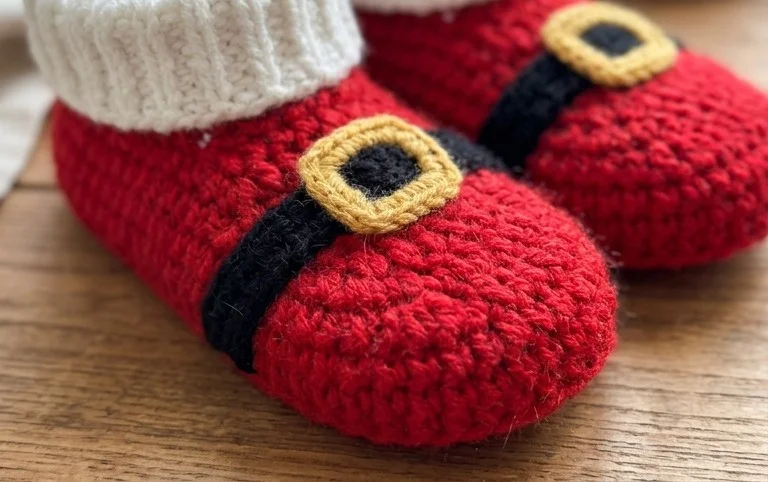
Finishing a pair of Christmas slippers gives you a warm, handmade project that can be worn through chilly evenings and brought out each holiday season. For a simple variation, keep the main slipper in a neutral shade and add a red or green cuff or toe. Check the fit as you work, since small changes in yarn thickness or tension can affect the length and width, and weave in the ends securely so they stay comfortable against your feet. If you make a pair, share a photo on Pinterest or your favorite social media page so other crocheters can see your color choices. Then explore more free crochet patterns on the blog for your next gift or cozy home project.