Easy Crochet Dishcloth Pattern for Using Leftover Yarn
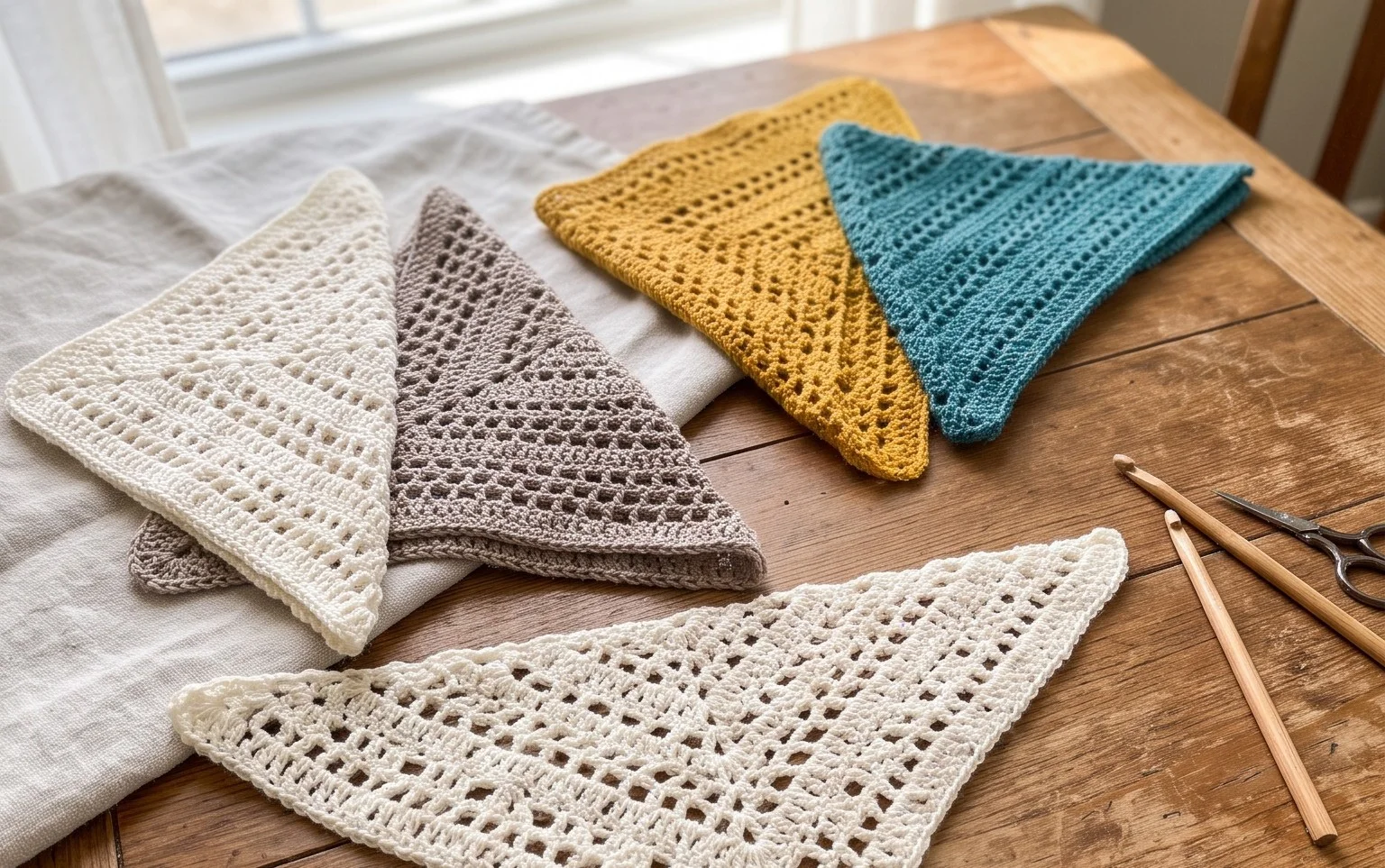
Small cotton scraps can become a striped dishcloth with a firm, pebbly surface that feels good in your hand and holds up to everyday kitchen cleanup. This project gives leftover yarn a useful job, especially when you have several short lengths in colors that work well together. The finished cloth is simple and practical, so it suits beginners building steady tension, gift makers putting together a handmade kitchen set, and anyone who likes useful home décor. You will work the dishcloth flat in rows of single crochet, changing colors where you like to make stripes or using one shade for a quieter look. The repeated stitch makes the fabric easy to follow, and watching the scraps turn into a useful household piece is satisfying without taking a whole weekend.
Why You’ll Love This Pattern
A firm cotton fabric and simple single crochet stitches make this dishcloth useful for everyday kitchen cleanup. The pattern is worked flat in straight rows, so you do not need to join rounds or keep track of increases and decreases.
The repeated rows are easy to settle into once the first row is complete. This is a practical project for a newer crocheter who wants to work on even tension, and it can be finished in an afternoon. A single skein usually makes more than one cloth, depending on its yardage and your tension.
100% cotton is absorbent, holds up to frequent washing, and gives the cloth a pleasantly textured surface. The plain shape also makes it straightforward to crochet as a useful housewarming or host gift.
The straight rows were easy to follow, and the finished cotton cloth feels sturdy enough for daily use.
— Lena, home crocheter
Pattern Overview & Skill Level
- Skill Level: Beginner. You need to know how to chain and single crochet.
- Approximate Time: About 2 to 3 hours, depending on your pace and tension.
- Construction: The dishcloth is worked flat in rows from the bottom edge upward. Each row has the same stitch count.
- Finished Dimensions & Sizing: About 8 inches wide by 7¾ inches tall, before washing. Small differences in tension can change the final measurements.
Gauge: 14 single crochet stitches and 16 rows measure about 4 inches in a relaxed, unwashed swatch. Matching gauge helps the cloth reach the stated size and use the estimated yardage. If your swatch is wider than 4 inches, try a smaller hook; if it is narrower, try a larger hook.
Materials & Supplies Needed
- Yarn: About 90 to 110 yards of worsted-weight cotton yarn, also called medium weight or #4. Choose 100% cotton for an absorbent, washable cloth. One solid color is enough; a partial skein can work if it contains the required yardage.
- Hook: 5.0 mm / H-8 crochet hook.
- Notions: Tapestry needle for weaving in the ends, scissors, and an optional stitch marker to mark the first stitch of a row.
- Substitution: A cotton-linen blend can make a slightly softer cloth with a linen-like texture. Cotton blends and different yarn weights may change the size and absorbency, so check gauge and expect yardage to vary. Avoid acrylic if you want a cloth that absorbs water well.
Stitch Guide & Abbreviations (US Terms)
- ch: Chain. Yarn over and pull through the loop on your hook.
- sc: Single crochet. Insert the hook into the stitch, yarn over and pull up a loop, yarn over again and pull through both loops.
- st / sts: Stitch / stitches.
- turn: Rotate the work so you can crochet back across the row.
The turning chain at the start of each row does not count as a stitch. Work the first single crochet into the first stitch of the previous row, directly below the chain. This keeps the edges straight and maintains 28 stitches in every row.
Step-by-Step Pattern Instructions
Dishcloth
- Starting chain: Chain 29. The chain makes the foundation for 28 single crochet stitches.
- Row 1: Single crochet in the second chain from the hook and in each chain across. Turn. (28 sts)
- Row 2: Chain 1, single crochet in each stitch across. Turn. (28 sts)
- Rows 3–31: Repeat Row 2, working one single crochet in each stitch across and turning at the end of every row. Each row has 28 stitches. (28 sts per row)
After Row 31, the dishcloth should measure close to 8 inches wide and 7¾ inches tall. If your piece is a little taller or shorter, that is fine; cotton can relax after washing, and small differences in row height are common.
Finishing
Cut the yarn, leaving a tail of about 6 inches. Pull the tail through the final loop to secure it. Thread the tail onto a tapestry needle and weave it through several stitches on the wrong side, then change direction and weave through a few more. Secure the starting tail in the same way. Trim the remaining yarn close to the fabric without cutting the stitches.
Care & Washing Instructions
- Wash cotton in cool or warm water, up to about 30°C, with similar colors; use a gentle cycle or hand wash if the yarn label recommends it.
- Lay the dishcloth flat to dry, smoothing the edges while damp. This helps it keep its shape and avoids unnecessary stretching.
- If the cloth curls or looks uneven after washing, reshape it flat while damp and let it dry fully; follow the yarn label for any blocking limits.
Pro Tips & Common Mistakes to Avoid
- Keep your starting chain relaxed. A tight chain can pull the lower edge inward; if it is much tighter than your single crochet rows, remake it with a slightly larger hook just for the chain.
- Count the stitches at the end of the first few rows. Place an optional marker in the first stitch of each row if you tend to miss the last stitch at the far edge.
- Weave in both tails on the wrong side, passing the needle through the cotton stitches and changing direction once. Do not knot the ends, since knots can form hard bumps and may loosen with repeated washing.
- For a wider or taller cloth, add stitches to the foundation chain and work extra rows. Each added foundation chain gives one more single crochet stitch, and each extra row adds height; both changes use more yarn.
Frequently Asked Questions
Can I use a different yarn fiber for this dishcloth?
Cotton is the best choice for absorbency and regular washing. A cotton-linen blend is also suitable, though it may feel softer or drape differently. Acrylic yarn tends to absorb less water, and a different yarn weight can change the finished dimensions, so make a gauge swatch before starting.
How can I make the dishcloth larger or smaller?
Change the foundation chain to adjust the width, remembering that the number of single crochet stitches is one less than the chain count. Work fewer or more rows to change the height. A larger cloth uses more yarn, while a smaller one uses less.
Is this pattern suitable for a first crochet project?
Yes. It uses only chains and single crochet stitches, with no shaping or complicated joins. Take care to work into the first stitch after each turning chain; skipping it is a common reason beginner projects become narrower as they grow.
May I sell dishcloths made from this pattern?
Check the designer’s terms before selling finished items, and credit the pattern source if its terms request it. If you sell the cloth, describe its yarn fiber accurately and give buyers clear care instructions based on the yarn label.
A finished cotton dishcloth turns a handful of yarn scraps into something you can reach for after cooking, and its firm rows feel sturdy in daily use. For a simple variation, make it a little wider by adding a few starting chains, then keep the same row pattern. If you used several colors, take a photo of the stripes and share it on Pinterest or your favorite social platform. Your color choices may give another crocheter an idea for their own small cotton ends. When you have another skein or a new pile of scraps to use, explore more free crochet patterns on the blog for practical projects to make at home or give as gifts.