Easy Crochet Dishcloth Free Pattern for Beginners Guide
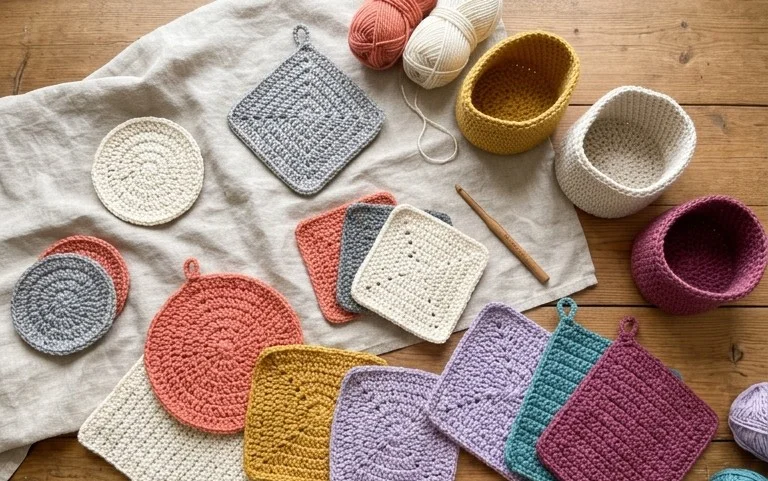
A firm cotton dishcloth has a slightly textured feel and straight edges that sit neatly beside the sink. This small square is useful for wiping counters or washing dishes, and it is a satisfying project to finish in an evening. Beginners can practice single crochet, turning chains, and keeping even tension without juggling several stitches. Gift makers can crochet one in a favorite kitchen color, while home decor lovers can choose shades that suit their space. The pattern uses less than one skein of cotton yarn and works flat in simple rows, so it is easy to check your stitch count as you go. You will also find guidance on gauge, finishing the edges, and caring for the cloth so it stays useful after washing.
Why You’ll Love This Pattern
A firm cotton dishcloth with straight edges is useful for wiping counters, washing dishes, or keeping beside the sink. This beginner-friendly pattern uses single crochet throughout, so you can focus on even tension and counting rather than learning several stitches. The small square works up in a few hours and uses less than one skein of cotton yarn, making it a practical project for a quiet evening or a first crochet gift.
The simple fabric is easy to check as you go: each row has 30 stitches, and there are no increases or decreases to manage. A finished cloth also gives you a useful way to practice turning chains and neat row edges before starting a larger project.
The rows were easy to keep track of, and the cotton cloth came out sturdy enough for everyday use. I liked having a simple project I could finish in an evening.
— Mara, beginner crocheter
Pattern Overview & Skill Level
- Skill Level: Beginner.
- Approximate Time: 2–3 hours, depending on your pace and tension.
- Construction: Worked flat in turned rows of single crochet, then finished with a short slip-stitch edging.
- Finished Dimensions & Sizing: Approximately 7.5 × 8 inches (19 × 20 cm) after washing, based on the gauge below. Minor differences are normal for a handmade cloth.
The pattern is written for a dense, absorbent fabric. Check your gauge before beginning if you want the stated dimensions; looser stitches make a larger, more open cloth, while tighter stitches make it smaller and firmer.
Materials & Supplies Needed
- Yarn: About 90 yards of worsted-weight (#4) 100% cotton yarn. Choose one color, or use two colors by changing yarn at the beginning of a row. Cotton absorbs water and tolerates frequent washing.
- Hook Size: 5.0 mm / H-8 crochet hook. Use the hook that gives you the gauge, even if you need to go up or down one size.
- Notions: Tapestry needle for weaving in the yarn ends, scissors, and a ruler or measuring tape. A stitch marker is optional for marking the first stitch of a row.
- Gauge: 16 single crochet stitches and 18 rows measure 4 inches (10 cm) in the main fabric, after washing and drying.
- Substitutions: Another worsted-weight cotton yarn is the closest substitute. A cotton-linen blend may feel less plush and can drape more; acrylic is less absorbent and may feel slippery. Substituting a different yarn weight or fiber can change the finished size and texture, so make and measure a small gauge swatch first.
Stitch Guide & Abbreviations (US Terms)
- ch: Chain. Yarn over and pull through the loop on the hook.
- sc: Single crochet. Insert the hook into the stitch, yarn over and pull up a loop, yarn over again and pull through both loops.
- sl st: Slip stitch. Insert the hook into the stitch, yarn over, and pull the yarn through both the stitch and the loop on the hook.
- st(s): Stitch or stitches.
- Turning chain: The chain made at the start of a row to bring the hook to the next row’s height. In this pattern, it does not count as a stitch.
Gauge swatch: Work a small square in single crochet, then measure the middle section rather than the edges. Adjust your hook size if you have more or fewer than 16 stitches across 4 inches.
Step-by-Step Pattern Instructions
Dishcloth
- Foundation: Make 31 ch. Keep the chain relaxed but even; a very tight foundation chain can pull the bottom edge inward.
- Row 1: Sc in the second ch from the hook and in each ch across. Turn. (30 sts)
- Rows 2–32: Ch 1; sc in each st across. Turn. The turning chain does not count as a stitch. (30 sts each row)
- Final row: After completing Row 32, ch 1 and work 1 sl st in each stitch across. This creates a compact top edge. (30 sts)
Finishing
Fasten off, leaving a tail long enough to weave in comfortably. Thread the tail onto a tapestry needle and weave it through the backs of several stitches, changing direction once so it is less likely to work loose. Weave in the foundation tail the same way. Trim only after the ends are secure. Wash the cloth before use to settle the stitches and remove any handling residue.
Care & Washing Instructions
- Wash cotton in warm water, up to 40°C (104°F), with like colors; use a cooler cycle if the yarn label recommends it.
- Reshape the cloth and dry it flat, or tumble dry on low if the yarn label allows it.
- After washing, smooth the edges and corners by hand while damp; follow the yarn label if the fiber content differs from cotton.
Pro Tips & Common Mistakes to Avoid
- Keep the edges even: Use the same relaxed tension on the foundation chain and row stitches. If the bottom edge is tighter than the rest, remake the chain with a hook one size larger, then switch to the main hook for Row 1.
- Count every row: Check for 30 stitches before turning. Place a marker in the first stitch if the end stitches are hard to see; accidentally skipping one at a row edge makes the cloth narrower.
- Hide ends securely: Weave each tail through the backs of several stitches and change direction. Avoid cutting the yarn immediately beside the fabric, since a short end can slip free after washing.
- Adjust size with care: For a wider cloth, add chains to the starting chain, remembering to chain one extra for the skipped chain. Add rows for extra length. Both changes use more yarn; a larger cloth also takes longer to dry.
Keep the stitch count and row count consistent if you want a square shape. At the listed gauge, 30 stitches make about 7.5 inches and 32 rows make about 8 inches. If your swatch is shorter or taller, use the measured gauge rather than adding rows at random.
Frequently Asked Questions
Can I use acrylic yarn for this dishcloth?
You can, but acrylic is generally less absorbent than cotton and may not feel as useful for drying dishes. It can also behave differently in hot water or a dryer. Check the yarn label and make a gauge swatch because the fabric and finished dimensions may change.
How can I make the cloth larger or smaller?
For a wider cloth, change the number of foundation chains while keeping one extra chain for the skipped chain in Row 1. For more length, work additional rows. Reducing chains or rows makes a smaller cloth. Any increase in size requires more yarn, and the finished cloth may take longer to dry.
Is this pattern suitable for a first crochet project?
Yes. It uses chain, single crochet, and slip stitch, with the same stitch count in every row. The main challenge is recognizing the first and last stitches at the edges, so count each row until those spots become easy to identify.
May I sell dishcloths made from this pattern?
Check the designer’s terms before selling finished items, and follow any requirements for pattern credit. If you sell the cloth, describe the yarn fiber accurately and include its care instructions so the buyer knows how to wash it.
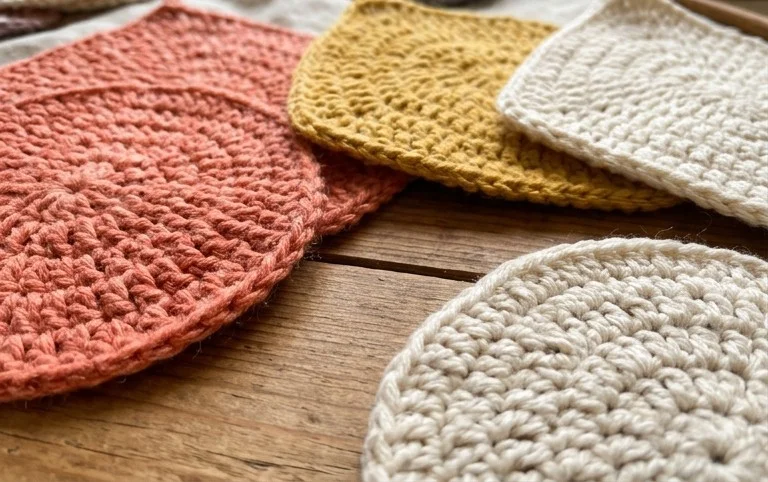
Your finished cotton dishcloth should feel sturdy in your hands, with tidy edges and a compact fabric ready for everyday kitchen use. For a simple variation, change the yarn color or make the starting chain a little longer to create a larger cloth, checking that each row still has the same stitch count. Wash and dry it according to the yarn label before putting it to work, since cotton may soften and settle after its first wash. If you enjoyed making it, share a photo on Pinterest or your favorite social media site and note the yarn color you chose. Then explore more free crochet patterns on the blog for another practical project to make at home or give to someone.